



Egg Collection Delivery System: Enhancing Efficiency, Quality, and Automation in Modern Poultry Farms
Release time:
Nov 24,2025
Source:
The Egg Collection Delivery System is becoming an essential solution for modern poultry operations seeking greater efficiency, consistency, and reduced labor dependency. As poultry farms expand and consumer demand for high-quality eggs increases, traditional manual egg collection methods can no longer meet today’s productivity requirements. The Egg Collection Delivery System offers a smart, automated, and gentle approach to transporting eggs from laying areas to centralized collection points, ensuring improved output and reduced losses. It is designed to support farms of all scales, helping operators streamline workflow while maintaining strict hygiene and quality standards.
One of the most significant advantages of the Egg Collection Delivery System is its ability to dramatically reduce egg breakage. Eggs are delicate, and manual handling increases the risk of cracks, contamination, and product waste. The system uses smooth, continuous belts and synchronized conveyors to minimize impact and vibration during transport. This gentle handling preserves shell integrity and improves the overall quality of collected eggs. The result is a higher percentage of marketable eggs, translating directly into increased revenue for farm owners.
Another key benefit is labor reduction. As labor shortages continue to challenge the agriculture industry, especially in large poultry farms, relying heavily on manual egg collection becomes inefficient and costly. The Egg Collection Delivery System automates this critical process, significantly lowering the number of workers required and reducing physical strain on staff. This allows farm operators to allocate labor resources to more essential tasks, ultimately improving management efficiency and lowering long-term operational costs.
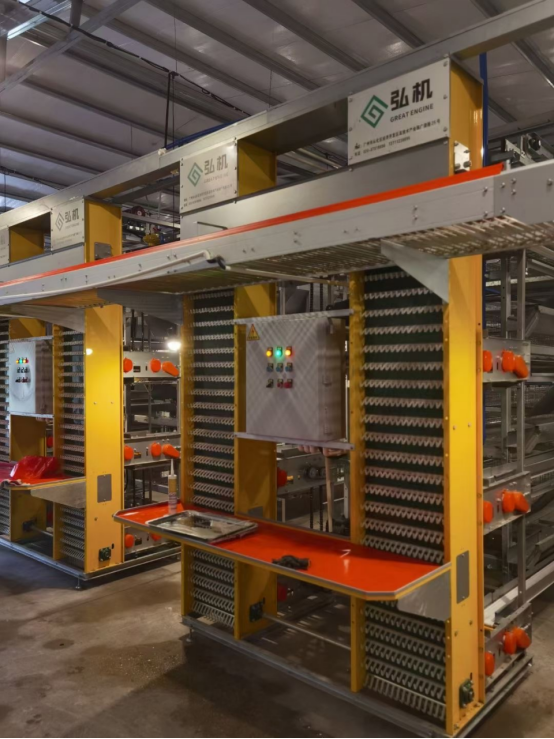
The system also enhances overall farm productivity. With automated and continuous egg movement, the system ensures timely collection, preventing eggs from remaining too long in nests where they may be stepped on, contaminated, or exposed to bacterial growth. This improves hygiene and supports a healthier poultry environment. Additionally, the consistent workflow eliminates bottlenecks caused by manual collection delays, allowing farms to maintain a steady production rhythm throughout the day.
Case studies from modern poultry operations demonstrate the real-world value of the system. Large-scale cage layer farms have adopted Egg Collection Delivery Systems to increase daily collection rates and maintain consistent egg quality across thousands of birds. Medium-sized farms have reported a significant reduction in labor costs after transitioning from manual to automated systems. Free-range and enriched colony farms benefit from customizable layouts that adapt to various housing designs. Across these applications, farmers consistently report fewer broken eggs, improved hygiene, and more reliable production output.
This system also solves multiple pain points that poultry farms commonly face. For farms struggling with egg damage and inconsistent quality, the system offers controlled, gentle transport. For operators dealing with labor shortages, it provides continuous automation. For businesses aiming to scale production, it ensures higher efficiency with minimal workflow interruption. Its modular structure makes it easy to integrate with existing farm equipment, including grading machines, packing systems, and collection tables.
In an industry where productivity, hygiene, and cost control are vital, the Egg Collection Delivery System stands out as a reliable and future-ready solution. It enables farms to modernize operations, enhance product quality, and meet rising market demands with confidence. Whether upgrading an existing farm or building a new automated facility, this system delivers long-term value, improved efficiency, and consistent performance for poultry businesses worldwide.
YOU MAY ALSO LIKE
Enhancing Excellence: Key Insights for Running a Quality Duck Farm
--- Establishing a quality duck farm requires a deep understanding of various elements that contribute to the health and productivity of ducks. These factors not only affect the welfare of the birds but also impact the overall efficiency and sustainability of the farming operation. **1. Selecting the Right Breed:** Choosing the appropriate breed is fundamental to the success of a quality duck fa
Southeast Asia Poultry Automation Trend: Low-Cost Upgrades for Small & Medium Farms
Labor shortages, high feed waste and tropical heat trouble many poultry farmers across Southeast Asia. Discover phased, budget-friendly automation upgrades for your existing chicken house, including automatic feeding, manure removal and climate control solutions.
Boost Your Poultry Yield with the Latest Equipment Advances
Boost Your Poultry Yield with the Latest Equipment Advances Table of Contents 1. Introduction to Poultry Farming Innovations 2. The Importance of Modern Equipment in Poultry Farming 3. Latest Advancements in Poultry Equipment - 3.1 Automated Feeding Systems - 3.2 Climate Control Solutions - 3.3 Health Monitoring Technology - 3.4 Advanced Watering Systems 4. Benefits of
EuroTier 2026 focuses on intelligent animal farming, animal welfare and emission reduction. Explore how integrated automated poultry cage systems help farms optimise manure management, cut labour input and improve production efficiency. Contact us for custom poultry housing solutions.
Custom 3-Tier H-Type Breeder Cage System Shipped to 30,000+ Capacity Thailand Poultry Farm
Our 3-tier H-type breeder cage solution was successfully installed on a Thailand breeder farm for over 30,000 breeder chickens. High-density layout, full automation, adapted to hot humid tropical climate.

Address: No. 25, Guangyuan Road, High-tech Industrial Park, Economic Development Zone, Conghua District, Guangzhou
Telephone: +86 20-87818896
Copyright © 2025 GUANGZHOU GREAT ENGINE POULTRY EOUIPMENT CO..LTD. | Stadt-Unterstation | Powered by www.300.cn